• Home
  • About Us
  • Copyright
  • Privacy Notice

The Smoke Break

You want some brie with that whine?

  • Home
  • Truth In Reporting
  • Hypocritical Politicians
  • Eroding Freedoms
  • Stoopid People
  • Do Something!

How The News Should Be Covered

August 8, 2009 By Joan of Snark

0
SHARES
Share on FacebookShare on Twitter

Here is an interesting and informative piece about what would elsewhere be termed a “confrontation” at Douglasville, Georgia meeting with Representative David Scott:

It is interesting because the reporter, Atlanta 11-Alive’s Duffie Dixon, does not editorialize the event; nowhere in her piece do we hear her opine the words “mob” or “teabag”.

It is informative because it simply presents the incident in question and provides both sides an opportunity to share a little more detail.  Properly leaving it up to the viewers to form their own opinions.

Hats off, Duffie.  You put the rest of the mainstream media to shame.

Share this:

  • Share on Facebook (Opens in new window) Facebook
  • Share on X (Opens in new window) X
  • Email a link to a friend (Opens in new window) Email

Filed Under: Truth In Reporting Tagged With: Dr. Brian Hill, Duffie Dixon, health care reform, mob protests, Rep. David Scott

Quote Of The Day

August 7, 2009 By Joan of Snark

0
SHARES
Share on FacebookShare on Twitter

Courtesy of James Taranto, writing at the Wall Street Journal:

“So, let’s review the arguments:

• Republicans are bad, they lost the last election, and they have partisan motives for wanting to stop ObamaCare.

• People who are angry about this are crackpots who display swastikas and other invidious symbols.  Also, their anger is insincere, and they are shills of the RNC.  They wear nice clothes, and this is not to their credit.

• Some of the arguments against ObamaCare are false, according to Obama.

• If ObamaCare is defeated, Obama would be hurt.

“Is there any argument for ObamaCare? In all the material we reviewed for this item, only this, from the Obama email:

“In other words, the “crisis” is so urgent that any thoughtful deliberation would entail intolerable delay. This is the same old argument that has already failed.

“If this is the best the president can do, he deserves to lose resoundingly.  If that hurts him, there’s always aspirin.”


Share this:

  • Share on Facebook (Opens in new window) Facebook
  • Share on X (Opens in new window) X
  • Email a link to a friend (Opens in new window) Email

Filed Under: Truth In Reporting Tagged With: health care reform, James Taranto, Obamacare, socialized medicine

Single-Payer Health Care To Get House Vote

August 6, 2009 By Joan of Snark

0
SHARES
Share on FacebookShare on Twitter

This just in, courtesy of my uber-liberal progressive (read:  most misguided) friend.  The House is planning to amend HR 3200 and replace it with HR 676 to create a national single-payer health plan.


In this e-mail:

  1. Single payer to receive a vote on the floor of the U.S. House
  2. Media appearances by Obama’s doctor (and PNHPer) Dr. David Scheiner
  3. New Kaiser Comparison of Congressional Health Plans
  4. Invitation to PNHP’s Annual Meeting: Saturday, October 24

August 5, 2009

Dear PNHP Members and Friends,

Breaking News!

Last Friday, Speaker Nancy Pelosi committed to bringing single-payer to a vote before the full House of Representatives when the chamber reconvenes to debate national health care reform in September.

The vote will come in the form of an amendment to the House Leadership’s incremental health legislation. The amendment, offered by Rep. Anthony Weiner (D-NY), would effectively remove the entire existing health plan and replace it with the text of H.R. 676, Rep. John Conyers’ single-payer legislation. (click here to see the text of the amendment).

This vote presents a truly historic opportunity – the first time that single-payer will be voted on in the Congress. (See the news release below).

PNHP and allied groups are now marshaling our forces to win maximum support for the Weiner single-payer amendment. We’re launching a new national campaign staffed by Ali Thebert and Nicholas Skala to make sure that members of Congress hear from their physician constituents that single payer is the only solution to the U.S. health care crisis.
Here’s what you can do:

  1. Use PNHP’s online campaign tool: send a letter to your Representative supporting the Weiner single payer amendment (click here to send a letter!).
  2. Arrange a meeting with your Representative: and use Weiner Single Payer Amendment lobbying materials available on the campaign web site (click here for the campaign web site). Try to visit your Representatives during the August recess while members are still in their districts. If you need help or strategy advice, emailali@pnhp.org.
  3. Speak out to local media and / or publish an op-ed: Please forward the included press release on the Weiner Amendment to your local media and offer to speak to the local press on behalf of the Amendment. Editorial board meetings and op-eds are also helpful at this time. (Click here for tips on writing op-eds)

In other news, PNHPer Dr. David Scheiner has been appearing in the media nationwide. Dr. Scheiner was Obama’s personal physician for 22 years until Obama became president. He was also the medical partner of PNHP National Coordinator Dr. Quentin Young for 30 years.

Dr. Scheiner has criticized the Obama health plan and called for single payer instead in media outlets ranging from Forbes magazine to Lou Dobbs to FOX News. 
Watch Dr. Scheiner’s appearance on CNN: 
http://www.youtube.com/watch?v=tb-OVHmhQFM

Dr. Scheiner will appear on “Real Time with Bill Maher” on Friday, August 7 at 10:00 Eastern on HBO. Be sure to tune in!

Other PNHP leaders have taken to the airwaves, including Margaret Flowers, Oliver Fein, Garrett Adams, Claudia Fegan and Andy Coates. Please exert every effort to speak out yourself, including through letters to the editor and op-eds.

For those of you who need help understanding the details of the various reform plans coming out of the House and Senate, the Kaiser Family Foundation has a side-by-side comparison tool for all proposals, including the House (HR 676) and Senate (HR 703) single-payer bills. (Click here for the Kaiser tool).

Finally, registration for the PNHP annual meeting on October 24 in Cambridge, MA is now open at www.pnhp.org/meeting. See our invitation letter reprinted below. We hope to see you there!

Cordially,

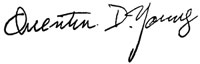
Quentin Young, M.D.
National Coordinator
Ida Hellander, M.D.
Executive Director


FOR IMMEDIATE RELEASE
Contact:
Aug. 5, 2009 Quentin Young, M.D., (312) 782-6006, info@pnhp.org
  Mark Almberg, PNHP, (312) 782-6006, mark@pnhp.org
  David Lerner or Karmen Ross, Riptide Communications,
(212) 260-5000


House vote on single payer will be historic first, doctors’ group says

Physicians call on lawmakers to ‘do the right thing’ on health reform

Hailing last week’s pledge by House Speaker Nancy Pelosi to hold a floor debate and vote on single-payer health reform this fall, a group of 16,000 physicians is launching an intensified campaign to educate lawmakers about the urgency of a “Medicare-for-All” solution to the nation’s health care crisis.

Leaders of Physicians for a National Health Program (PNHP) say their campaign includes a stepped-up program of visits by doctors to House members in their home districts during the August recess.

Last Friday’s commitment by Pelosi (D-Calif.) to Rep. Anthony Weiner (D-N.Y.) to put hissingle-payer amendment to H.R. 3200, the House leadership’s health reform bill, to an up-or-down vote before the full House has set the stage for first-ever floor vote of its kind. The House debate on the amendment could begin as early as September.  

“Single payer has gone from being ‘off the table’ to ‘on the floor,'” said Dr. Quentin Young, national coordinator of PNHP. “This dramatic turn of events is a striking indicator of our success. It shows the House leadership recognizes the strong public support – including among doctors – for removing the wasteful insurance company middlemen from our health system and redirecting the resultant savings into care.”

Weiner’s amendment would delete most of the language of in the House bill and instead substitute language from H.R. 676, the single-payer bill introduced by Reps. John Conyers Jr. (D-Mich.) and Dennis Kucinich (D-Ohio).

The Weiner amendment, unlike the House leadership’s bill, assures universal, comprehensive, and high-quality coverage, free choice of doctor and hospital, and no co-pays or deductibles through a publicly financed system similar to Medicare. Young said that because of massive savings on private insurance overhead and paperwork, the amendment would entail no increase in U.S. health spending, in contrast to the House bill’s $1 trillion price tag over 10 years.“By recapturing the administrative waste associated with our present multi-payer, for-profit private insurance system, estimated to be $400 billion annually, a single-payer program would have more than enough resources to cover everyone who lacks insurance now and to upgrade everyone else’s,” he said.

“A single-payer system would also possess strong cost-control tools like bulk purchasing of drugs, negotiation of fees and global budgeting, controls that are notably absent in the House bill,” he said.

Young says many union, civic and faith-based groups will be watching how lawmakers vote with an eye to the 2010 election cycle. “Lawmakers now have a golden opportunity to stand up for the best interests of their constituents, to rebuff the private, for-profit health insurance industry, and assure the health of our nation,” he said.

He continued: “Many members of Congress – including Speaker Pelosi – have told constituents that they personally support a single-payer, Medicare-for-all approach, but claim they can’t vote for it because it’s not politically feasible. Yet polls that show they would have the public’s support for such a stand. Now we’ll be watching to see whether their votes match their words.”

Single-payer bills have been introduced in Congress repeatedly over the past 60 years – starting with the Wagner-Murray-Dingell bill in the 1940s, and including the Kennedy-Griffiths bill of the 1970s and the Wellstone, McDermott and Russo bills of the 1990s – but none has ever reached the floor of the House or Senate.

*****

Physicians for a National Health Program (www.pnhp.org) is an organization of 16,000 doctors who advocate for single-payer national health insurance.

Several leaders of PNHP have testified before congressional committees in the present health reform debate. (See links below). To interview any of these or other spokespersons, please call (312) 782-6006.

Testimony of Steffie Woolhandler, M.D., M.P.H., on medical bankruptcy and health reform before the Subcommittee on Administrative and Commercial Law
House Judiciary Committee, July 28, 2009:
http://www.pnhp.org/news/2009/july/testimony_of_steffie.php

Testimony of Dr. Woolhandler before the Health Subcommittee of the House Energy and Commerce Committee, July 24
http://www.pnhp.org/news/2009/june/testimony_of_steffie.php

Testimony of Quentin Young, M.D., M.A.C.P., before the House Ways and Means Committee, June 24
http://www.pnhp.org/news/2009/june/testimony_of_quentin.php

Testimony of Margaret Flowers, M.D., before the Senate HELP Committee, June 11
http://www.pnhp.org/news/2009/june/testimony_of_margare.php

Testimony of David U. Himmelstein, M.D. before the HELP Subcommittee, April 23
http://www.pnhp.org/news/2009/april/testimony_of_david_u.php


August 5, 2009Dear Colleagues,    We write to invite you to attend the Annual Meeting of Physicians for a National Health Program on Saturday, October 24, in Cambridge, Massachusetts. It will be preceded by our popular Leadership Training course, starting at 1:00 p.m. on Friday, October 23, at the Harvard Faculty Club.Registration for the Annual Meeting is now on-line at www.pnhp.org/meeting. To register for leadership training (space is limited), please call Matt Petty at 312-782-6006. 

The theme of the meeting is “Evidence-based or market-based health reform? Health Policy in the Obama Era” with health economist William Hsiao, Dr. Marcia Angell (former editor, NEJM), PNHP co-founders Drs. David Himmelstein and Steffie Woolhandler, PNHP President Dr. Oliver Fein, T.R. Reid (“Sick Around the World”), former Cigna executive Wendell Potter, and more.

The conference hotel is the Royal Sonesta (617-806-4200, $209 single/double reserve by September 23), with leadership training at the nearby Harvard Faculty Club.

PNHP is committed to promoting fundamental health care reform over the long term. Although proposals based on mandating that individuals purchase private insurance (like HR 3200) have the backing of the powerful drug and insurance lobbies (PhRMA alone has already spent $17 million on supportive ads), they certainly won’t solve the health care crisis. That’s the bad news.

The good news is that we’ve seen our single-payer proposal go from being “off the table” (Senator Max Baucus) to being “on the floor,” with a commitment from Speaker Nancy Pelosi to a full House vote on single payer in the form of the Weiner amendment after the recess (see press release, enclosed).

PNHPers have played a leading role in this historic development, testifying before committees in the House and the Senate on single payer, and before the House Judiciary committee on medical bankruptcy, and making numerous media appearances, including on Bill Moyers, Bill Maher, Fox News, CNN, Colbert, Ed Schultz, Democracy Now, and more.

This surge in media and congressional interest was almost certainly triggered by the courageous and dignified acts of civil disobedience before the Senate Finance Committee by PNHPers, nurses, and citizen activists in May. 

As the administration’s inadequate proposals are either enacted or rejected, our single-payer proposal takes on even more importance as the only remedy for the health care crisis.

Please join us as we assess the status of health reform and plan PNHP’s policy and strategy for the future.

Yours truly,

Quentin Young, M.D.
National Coordinator
Ida Hellander, M.D.
Executive Director

P.S. Your membership in PNHP is more important than ever.  Please consider renewing your membership or making a special donation at this critical time: www.pnhp.org/renew orwww.pnhp.org/donate. 


Welcome to socialized medicine.  It is the end of the private health insurance sector, as stated in this section of the amendment:

SEC. 104. PROHIBITION AGAINST DUPLICATING COVERAGE.
(a) IN GENERAL.-It is unlawful for a private health insurer to sell health insurance coverage that duplicates the benefits provided under this division.

The CBO is going to have a field day, since little is mentioned beyond a “global budget” to pay all of the doctors, nurses, other staffs, and “capital expenditures” associated with providing the entire country with medical care.  Funding will come from:

  • Existing sources of Federal Government revenues for health care.
  • Increasing personal income taxes on the top 5 percent income earners.
  • Instituting a modest and progressive excise tax on payroll and self-employment income.
  • Instituting a small tax on stock and bond transactions.
  •  Money that would have been spent for Federal public health care programs, including
    • the Medicare program
    •  the Medicaid program
    •  the Children’s Health Insurance Program

So, punk, you feeling “extremist” yet?  You think your unrepresenting representative is going to vote “yes” for this?  There are those who just might.  Or it could be a ploy to incite so much anger that HR 3200 and whatever ends up coming out of the Senate committee appears almost reasonable in comparison.

Don’t be fooled.  Don’t let your guard down, no matter what kind of names the Democrats want to call us.

Share this:

  • Share on Facebook (Opens in new window) Facebook
  • Share on X (Opens in new window) X
  • Email a link to a friend (Opens in new window) Email

Filed Under: Truth In Reporting Tagged With: health care reform, HR 3200, HR 676, Obama health care, single-payer

Facts ARE Stubborn Things

August 6, 2009 By Joan of Snark

1
SHARES
Share on FacebookShare on Twitter

It is quite apparent that President Obama and his staff really haven’t read HR 3200 or any other variation of the proposed “health care reform” that he insists is so desperately needed by the upwards of 80% of Americans who are actually quite satisfied with their current health insurance.  As regular Americans read the bill(s) and begin to understand what the various, lengthy sections really mean in terms of dollars, cents, and loss of freedoms they are becoming angry.

They are speaking out.

They are asking questions.

But their unrepresenting representatives aren’t listening.  And they aren’t answering the questions.

So the anger of the American people grows.  It acts as the spur to take a lunch hour, or an afternoon off of work, to go out and do something most of us have never done before. 

Protest.

Join up with others of like-mind (in some cases up to 10,000 of them) and march to make a clear and visible statement to the unrepresenting representaties who aren’t listening or are doing their damndest to avoid the questions.

The White House, at last realizing that while you can fool some of the people all of the time, you can’t fool all of the people all of the time, doesn’t know what to do with real, tangible, and logically-presented opposition.  Those tens of thousands of regular, hard-working Americans now find themselves on the receiving end of left-wing nut, radicalist tactics of cruel labeling and derision.

White House Press Secretary Robert Gibbs:

“I think there is a lot of manufactured anger going on.”

The Democratic National Committee has now set out to round up its members through word-of-mouth and email:

There’s been a lot of media coverage about organized mobs intimidating lawmakers, disrupting town halls, and silencing real discussion about the need for real health insurance reform.

The truth is, it’s a sham. These “grassroots protests” are being organized and largely paid for by Washington special interests and insurance companies who are desperate to block reform. They’re trying to use lies and fear to break the President and his agenda for change.

Health insurance reform is about our lives, our jobs, and our families — we can’t let distortions and intimidation get in the way. We need to expose these outrageous tactics, and we’re counting on you to help. Can you read these “5 facts about the anti-reform mobs,” then pass them along to your friends and family?

5 facts about the anti-reform mobs

1. These disruptions are being funded and organized by out-of-district special-interest groups and insurance companies who fear that health insurance reform could help Americans, but hurt their bottom line. A group run by the same folks who made the “Swiftboat” ads against John Kerry is compiling a list of congressional events in August to disrupt. An insurance company coalition has stationed employees in 30 states to track where local lawmakers hold town-hall meetings.

2. People are scared because they are being fed frightening lies. These crowds are being riled up by anti-reform lies being spread by industry front groups that invent smears to tarnish the President’s plan and scare voters. But as the President has repeatedly said, health insurance reform will create more health care choices for the American people, not reduce them. If you like your insurance or your doctor, you can keep them, and there is no “government takeover” in any part of any plan supported by the President or Congress.

3. Their actions are getting more extreme. Texas protesters brought signs displaying a tombstone for Rep. Lloyd Doggett and using the “SS” symbol to compare President Obama’s policies to Nazism. Maryland Rep. Frank Kratovil was hanged in effigy outside his district office. Rep. Tim Bishop of New York had to be escorted to his car by police after an angry few disrupted his town hall meeting — and more examples like this come in every day. And they have gone beyond just trying to derail the President’s health insurance reform plans, they are trying to “break” the President himself and ruin his Presidency.

4. Their goal is to disrupt and shut down legitimate conversation. Protesters have routinely shouted down representatives trying to engage in constructive dialogue with voters, and done everything they can to intimidate and silence regular people who just want more information. One attack group has even published a manual instructing protesters to “stand up and shout” and try to “rattle” lawmakers to prevent them from talking peacefully with their constituents.

5. Republican leadership is irresponsibly cheering on the thuggish crowds. Republican House Minority Leader John Boehner issued a statement applauding and promoting a video of the disruptions and looking forward to “a long, hot August for Democrats in Congress.”

It’s time to expose this charade, before it gets more dangerous. Please send these facts to everyone you know. You can also post them on your website, blog, or Facebook page.

Now, more than ever, we need to stand strong together and defend the truth.

Thanks,

Jen

Jen O’Malley Dillon
Executive Director
Democratic National Committee

President Obama put his John Hancock on a message sent out by his very own community organizers:

“This is the moment our movement was built for.  There are those who profit from the status quo, or see this debate as a political game, and they will stop at nothing to block reform. They are filling the airwaves and the Internet with outrageous falsehoods to scare people into opposing change. And some people, not surprisingly, are getting pretty nervous.  So we’ve got to get out there, fight lies with truth, and set the record straight.”

And instead of addressing the facts of the matter, instead of discussing the facts set down in black & white in the proposed legislation, the White House has put a snitch program in place.  This means that if your friend emails you with their opinion about health care reform and you don’t like their argument or you read a blog and don’t like what it says, you can run squealing to Pater Obama.

There is a lot of disinformation about health insurance reform out there, spanning from control of personal finances to end of life care.  These rumors often travel just below the surface via chain emails or through casual conversation.  Since we can’t keep track of all of them here at the White House, we’re asking for your help. If you get an email or see something on the web about health insurance reform that seems fishy, send it to flag@whitehouse.gov.

“Flag” anyone who sees what Congress is proposing as being wrong for the country?  Just what will Obama and the administration do with the list of thousands upon thousands of names of Americans who disagree with their agenda for “change”?  What do they intend to do to all of those people?  How many names of those in Washington will go onto this list because their own words – as documented in writing and in numerous videos – are now proven by the legislation on the table to be both “fishy” and “disinformation”?

This is beyond sandbox squabbling.  It smacks of tactics used in Nazi Germany and the tactics recently used in Iran after their so-called presidential election.  The White House thinks that by putting the fear of being “outed” to the government into the general populace, they’ll shut down the opposition to their plans.

They couldn’t be more wrong.

Because by using such nefarious tactics to attempt to silence the voice of American people, silence the voice of the people who have given them the very job they hold, the American people rightfully see it as proof that the only “reform” in the Obama administration’s plans for “health care reform” is to eliminate their freedom.  Congress is putting it down word by word, in black and white. 

And it is YOUR right, it is MY right, to tell them we want no part of it.

We surround them.  We will not be silenced.  And as it finally dawns on them, they are now – at long last – afraid. 

 It’s a beautiful thing.


Share this:

  • Share on Facebook (Opens in new window) Facebook
  • Share on X (Opens in new window) X
  • Email a link to a friend (Opens in new window) Email

Filed Under: Truth In Reporting Tagged With: DNC lies, health care reform, mob protests, White House lies

Quote Of The Day

August 3, 2009 By Joan of Snark

0
SHARES
Share on FacebookShare on Twitter

“Let the Hollywood crowd write those checks. Let academia write them. Let Acorn write those checks. Let members of Congress past and present write them. Let Mr. and Mrs. Obama, Mr. and Mrs. Clinton, and Mr. Carter write a few with their book royalties. Let checks be written by the faceless AND NOT SO FACELESS bureaucrat straphangers in DC and in statehouses whose jobs depend on deficits. Let the unions write them with dues rather than funding election campaigns. Let leftist bloggers write one as a rite of passage. Let the media write some. Let General Electric write checks. Let the Republicans who let us down write some as well. And let them be written by all who believe deficits should be funded with someone else’s money. Then we shall see what we can afford. I don’t have any more checks in my checkbook.”

(Dick Hough, Camarillo, CA, in response to the news that projecting the U.S. deficit out beyond the 10-year marker being used to sell increased debt through socializing American medicine shows the number nearing $10 trillion, or $214,000/person today.)

Share this:

  • Share on Facebook (Opens in new window) Facebook
  • Share on X (Opens in new window) X
  • Email a link to a friend (Opens in new window) Email

Filed Under: Truth In Reporting Tagged With: health care reform, U.S. deficit

Fear-Mongering Begins For Tax Increases

August 2, 2009 By Joan of Snark

0
SHARES
Share on FacebookShare on Twitter

We couldn’t afford what they spent then, and we’re not going to be able to afford what they want to spend now.  But despite all the song and dance about stimuluses and leaving the middle-class alone while we fix more things that aren’t broken, at some point something has to give and administration officials today have begun spilling the beans that tax increases are coming.

“We will not get this economy back on track, recovery will be not strong and sustained, unless we … can convince the American people that we’re going to have the will to bring these deficits down once recovery is firmly established,” Treasury Secretary Tim Geithner said on ABC’s “This Week.” 

Asked point blank whether it was right to suggest it is a matter of when, not if, taxes will be raised, Geithner responded, “It is absolutely right.”

Former Federal Reserve Chairman Alan Greenspan warned that even a deficit-neutral plan being touted by Democrats to fund government-run health insurance program won’t be enough in the long run. 

“We have to attack both the original shortfall and make sure we fund whatever new initiatives that occur in the health care area. It’s not adequate to be strictly revenue-neutral, because there’s a lot more to be done,” he said, noting the large number of baby boomers who currently are signing onto Medicare.

Personally, I’ve not asked the federal government to spend anything close to what it has been spending for years on various programs and entitlements and special interests.  I never asked them to let Wall Street trade in toxic assets or to force banks to loan money to people who can’t afford to pay it back.  I didn’t ask them to buy not one, but two car companies for me.  I didn’t ask them to try to take over American medicine and I certainly never asked them to try to turn C02 into a trading commodity that will raise the price of everything so they and a few of their friends can become the “evil rich” they speak of so derisively today.

Did you?

Share this:

  • Share on Facebook (Opens in new window) Facebook
  • Share on X (Opens in new window) X
  • Email a link to a friend (Opens in new window) Email

Filed Under: Truth In Reporting Tagged With: health care reform, tax increases, Tim Geithner, U.S. deficit

Pater Obama Is Watching You

August 1, 2009 By Joan of Snark

0
SHARES
Share on FacebookShare on Twitter

If the following makes you feel like you’ve just entered the Twilight Zone, welcome to the Obamanation.

Folks who are interested applying to the “Cash for Clunkers” program are directed to a federal government website, cars.gov.  If they want to participate, their dealer fills out an application and, in order to submit it, has to go through the usual agreement to the site’s terms and conditions.  Or are they really the usual “terms and conditions”?

When it involves the Obama administration, the sad truth is that it’s a scam designed to take something away from you.  In this case, when you’re a car dealer, it’s your privacy.

The dealer user agreement reads, in part:

“This application provides access to the DoT CARS system.  When logged on to the CARS system, your computer is considered a Federal computer system and is the property of the U.S. Government.

Any or all uses of this system and all files on this system may be intercepted, monitored, recorded, copied, audited, inspected, and disclosed to authorized CARS, DoT, and law enforcement personnel, as well as authorized officials of other agencies, both domestic and foreign.”

What this means is that EVERYTHING on that computer immediately becomes fair game to the Feds.  Including customer information.  And leaving the website won’t stop them.  Through the use of what is commonly known as “malware” (malicious software programs deliberately placed on a computer, normally to steal information) and those inevitable tracking cookies, the government can continue to monitor all activities until their code is found and wiped off your system.

‘Tis truly a nasty way to gather information about American citizens, but unfortunately, it’s legal. 

Thanks to Glenn Beck for exposing this.

Share this:

  • Share on Facebook (Opens in new window) Facebook
  • Share on X (Opens in new window) X
  • Email a link to a friend (Opens in new window) Email

Filed Under: Truth In Reporting Tagged With: cars.gov, cash for clunkers, glenn beck, government spying

Government-Run Health Care Is Deadly Medicine

July 27, 2009 By Joan of Snark

0
SHARES
Share on FacebookShare on Twitter

Both the House and Senate are putting on their best Sunday-go-to-meetin’ faces and telling the media that work on “health care reform” is 80% complete.  This means that 80% of the endless laundry list of economic and personal-rights negatives in the bills in both House and Senate are in place and they’re not going to go anywhere.

This means that it is a sword of Damocles that hangs over the heads of the American people as the Obama administration prepares for a complete government takeover of the practice of medicine in the United States.

If that doesn’t frighten you to death, rest assured that with their kind of government “help”, you’ll be dead soon enough.  Especially if you look at who’s going to be making decisions about what kind of care the government is going to allow you.

One of them is Dr. Ezekiel Emanuel, the brother of White House Chief of Staff Rahm Emanuel and the health-policy adviser at the Office of Management and Budget and a member of Federal Council on Comparative Effectiveness Research.  His biography shows him to be a “bioethicist” and a  fellow at the right-to-die Hastings Center.  Here are some of his views about modern medicine.

“Vague promises of savings from cutting waste, enhancing prevention and wellness, installing electronic medical records and improving quality are merely ‘lipstick’ cost control, more for show and public relations than for true change.” (Health Affairs Feb. 27, 2008)

(It’s more efficient to start with the root cause:  reduce the number of people alive and needing treatment?)

Doctors take the Hippocratic Oath too seriously, “as an imperative to do everything for the patient regardless of the cost or effects on others.” (Journal of the American Medical Association, June 18, 2008)

(Remind that cancer patient whose treatment allowed them be around just long enough to see their son or daughter take their first steps, or graduate from college and their family about this, ok?)

Medical care should be reserved for the non-disabled, not given to those “who are irreversibly prevented from being or becoming participating citizens . . . An obvious example is not guaranteeing health services to patients with dementia.” (Hastings Center Report, Nov.-Dec. ’96)

(But it’s all right with the Obama administration if dead people vote.)

“Unlike allocation by sex or race, allocation by age is not invidious discrimination; every person lives through different life stages rather than being a single age. Even if 25-year-olds receive priority over 65-year-olds, everyone who is 65 years now was previously 25 years.” (Lancet, Jan. 31)

(You’re already 52, Dr. Emanuel.  Ready to start moving to the back of the line?)

“Hospital rooms in the United States offer more privacy . . . physicians’ offices are typically more conveniently located and have parking nearby and more attractive waiting rooms” (JAMA, June 18, 2008)

(Heaven forbid that people who are sick might find some modicum of comfort in the place they receive treatment.)

“Every favor to a constituency should be linked to support for the health-care reform agenda. If the automakers want a bailout, then they and their suppliers have to agree to support and lobby for the administration’s health-reform effort.” (Nov. 16, 2008, Health Care Watch)

(So that explains why the UAW retirees now have to pay for their own Viagra!)

Maybe this is why Ted Kennedy has been keeping such a low profile.

Share this:

  • Share on Facebook (Opens in new window) Facebook
  • Share on X (Opens in new window) X
  • Email a link to a friend (Opens in new window) Email

Filed Under: Truth In Reporting Tagged With: Dr. Ezekiel Emanuel, health care reform, HR 3200, socialized medicine

Their Criticism Is That We Dare To Do The Math

July 26, 2009 By Joan of Snark

0
SHARES
Share on FacebookShare on Twitter

Last week, Jake Tapper interviewed Neil Barofsky, Special Inspector General for the Troubled Asset Relief Program (TARP), who just this week released a report on the whopping potential federal obligation of the bailout and other programs the Obama administration is using to jumpstart the economy. This is a transcript of the podcast.

Jake:  Hello, and welcome to the ABC News shuffle.  I’m Jake Tapper in the White House booth and joining us today for a very special podcast is Neil Barofsky; he is the SIGTARP.  SIGTARP stands for “Special Inspector General for the Troubled Asset Relief Program”. That’s the hundred of billions of your tax dollars going to help shore up the financial system, and he is charge of making sure those dollars are spent wisely and with accountability.  So Mr. Barofsky, thank you for joining us.

Neil:  It’s a pleasure to be here.

Jake:  You, this week, testified that the bailout could reach far more than $700 billion, but actually $23.7 TRILLION dollars. How did you arrive at that figure?

Neil:  Well, basically what we did is, you know my oversight responsibility is over the TARP.  And the TARP, which started out to be a $787 billion program, it itself has expanded.  It’s now with other programs; the Federal Reserve, the FDIC, covers about $3 trillion.

Jake:  How did that happen?  How is it $3 trillion all of a sudden?

Neil:  Well, basically, what happened was is that the TARP money was the seed money for other programs.  So, for example, you have a program called the TALF, which is used to buy asset-backed securities and it’s a program that’s run by the Federal Reserve, but up to $100 billion of it is going to be TARP money and then the Federal Reserve is going to kick in the other $900 billion.  Similarly…a guarantee of Citibank’s assets, that’s about a $300 billion asset guarantee.  TARP money is about $5 billion, the rest is going to be chipped in by the FDIC or the Federal Reserve.  So programs like that, they sort of expanded our initial oversight of $700 billion so now we’re looking at, if everything goes as expected, to almost $3 trillion.

SIGTARPtable3-5sm

Jake:  And when you say “we”, how many people are in your office? 

Neil:  We have about 70 people on board right now; we’re building, with a target of about 160 by early next year.

Jake:  So, $23.7 trillion; I didn’t even know $23.7 trillion existed?

Neil:  They may not, so what we did, we thought it was necessary because so many of the financial institutions that participated in the TARP also participated in other, non-TARP programs. Things like guarantees of debt from the FDIC, or they borrow money from the Federal Reserve, so we thought it was important in bringing transparency to summarize all these programs.  And it is an alphabet soup of programs, every one has a different acronym and I think there’s a lot of confusion.  So what we decided to do in our most recent quarterly report is put them all together in one section, and we lay out approximately 50 different programs that have been announced by the federal government and what we thought would be helpful is to put down 3 numbers with respect to each program. One, how much money is currently oustanding under the program; two, what the high-water mark has been since the inception of the bailout; and then three, what is the total amount that the federal government has said they’re willing to commit to each program.  And at the end we add them all up, and that’s where the $23.7 trillion number comes from.  It’s what the federal government has said would be the maximum number for each of the apprximately 50 programs that we detail in our report if they were all subscribed to, if they were all maxed out, all at the same time.  Now, that doesn’t mean that that’s what the taxpayer’s currently on the hook for; we’ve never said that.  We just wanted to put it in perspective, of what all the different programs were and that is a very accurate number as to what the total commitment and support the federal government has pledged the financial system.

 SIGTARPtable3-4

Jake:  Now, the Treasury Department called your figure of $23.7 trillion “inflated”.  Not only that, but they’ve questioned how you reached the numbers, your methodology; even, in a way, you’re credibility.  What’s your response to that?

Neil:  I think the Treasury Department ought to read the report before they make comments. At least the spokesperson’s office.  Because the Treasury itself did read the report before it went out. We vet our reports with the Treasury and the other federal agencies involved before they go out.  We take their comments, we incorporate their comments.  So it’s a little surprising, having had a chance to comment on the report before it went out and not using words like “inflated” or “misleading”, that now they’re saying that.  As far as their criticism of our methodology, our methodology is laid out in black and white in the report.  It’s actually kind of funny, some of their criticisms are actually pulled from our methodology, where we explain some of the limitations of this number.  We explain what I just explained to you right now, that we’re not saying that this is the total amount of money that’s outstanding right now, this was all laid out in black and white.  As far as the numbers being “inflated”, where do you think we got the numbers from?  We got it from the Treasury Department, we got it from the Federal Reserve.  We got it from their websites,from statements they’ve made to Congress.  If these numbers are inflated, it’s because they inflated them when they put them out in the public.  Not because of us. All we’ve done is gather the 50 programs, put them in one place, and told the American people what the government has said about the maximum of each of these programs.  You know, we joke, I don’t think the Treasury’s really criticizing our attempt to gather these all in one place, and I can’t think they can really criticize the fact that we’re saying what the maximum number is, so perhaps their criticism is that we dare to do math?

Jake:  The President, and I don’t know, I imagine you’re a non-partisan?  Are you a Democrat or a Republican?

Neil:  Well, it’s been reported and it’s true I’ve been a registered Democrat since I turned 18.

Jake:  Ok.  Is it fair to say that you voted for President Obama?

Neil:  It’s been in the press reports and on my thing, I actually contributed to the President’s campaign.

Jake:  Ok.  So you’re not rooting against President Obama and you’re not an opponent of his, one would say.  He promised unprecedented transparency and accountability.  From what you have seen, from your perch as Special Inspector General for TARP, is he abiding by that promise?

Neil:  I can’t really assess him individually but from the Treasury’s perspective, no. Treasury is not being transparent with respect to the TARP.  They failed to adopt some very basic recommendations we’ve had towards transparency and, frankly, this recent attack on my report is really, in many ways, an attack on basic transparency.  Of not wanting the American people in a certain way to see exactly what’s going on in their government, as included in our report. So I think no, they’ve not met, at least in the Treasury Department and at least with respect to this program, they’ve not met their claim that this was going to be “unprecedented transparency”.

Jake:  As somebody who contributed to President Obama, is this disappointing on any sort of personal or professional level?

Neil:  You know, you can’t really do the job that I have and let any sort of personal feelings or really any political feelings enter into your thought process.  The job we’re entrusted to do by the American people doesn’t have anything to do with Democrat, Republican, and left, right, or middle.  It’s just a question about bringing the truth to the surface, pushing for maximum transparency, providing the necessary oversight for these programs.  So I don’t really engage in those types of thoughts because they’re not really helpful.

Jake:  Robert Gibbs, the White House Press Secretary, was asked this week about your report and he said the TARP is, and the Treasury Department are, transparent and accountable, they do make reports, and one of the issues he said is that these dollars are fungible, that you can’t necessarily “trace”, his argument would be, you can’t necessarily trace a dollar as it goes from the Treasury Department to a bank and then out into the world. What would your response to that be?

Neil:  Well, this is what his response was when we made this recommendation last December and first we tried to convince Treasury that they were wrong, that although money is certainly fungible, banks can and should be required to report on their use of funds.  When Treasury refused, we took matters in our own hands and we sent out a voluntary survey and just asked the banks a simple question, “Hey, can you tell us how you use the money?”  And the response was overwhelming.  We put an audit report out this week with the results and the answer is yes, they CAN say what they did with the money.  And we put out the report and what did we see?  We saw the banks used it to shore up lending, some increased lending; a lot of them said they would have had to reduce lending significantly absent TARP funds, but that’s not all.  They explained, a certain percentage explained how they used it to make investments and others talked about how they used the funds to acquire other banks, or just kept it on their books as a cushion for future losses. So my response to the White House, and my response to Treasury is that you don’t believe what I have to say, if you don’t believe, really, a common sense approach to fungibility of money, look at the audit report.  Look at the responses from the individual banks who’ve told us how they’ve used that money.  This is a basic form of transparency and it’s going to be helpful, I think. Helpful to the administration to know what’s going on, how these banks are using the money.  It’s going to be helpful, also, to give the American people some  degree of comfort that somebody, their government, is going out and bringing this transparency, is looking to see how these funds are being used.  The money’s not being thrown into a black hole.

Jake:  You got into…I don’t know if “tiff” is the right word? But a disagreement with the Treasure Department a few months ago that came to light a few weeks ago about seeking some information.  I believe it was information about AIG.  What can you tell us about that and why do you think Treasury was pushing back on giving you the information you sought?

Neil:  I think the dispute that’s really percolating right now is a lot more about our independence and where we fit within the government.  I think that is a serious concern for us.  Ultimately, the question about the particular documents or having access to particular individuals, I think that’s long resolved.  Treasury has committed and they have, in fact, given us access to the necessary documents that we sought and they’ve given us access to the people that we need to speak to.  But what is still percolating is Treasury seeking an opinion from Department of Justice that we are subject to the supervision of the Secretary, and implicit in that is that the Secretary would have the ability to shut down an audit or an investigation.  And that’s obviously something that we’re very, very concerned about.  If the Secretary decided, let’s say, that this recent report that we put out, that he didn’t like the fact that we were going to be diclosing numbers of $23.7 trillion, that we’re going to sum up all these programs and put this information out there, if they had this authority, would he order us not to do it?  I don’t know the answer to the question but I don’t want to find out the answer to that question and I think that Congress made it very clear that they intended for us to be an independent agency and not subject to such supervision.  So we’ll see what happens.

Jake:  So when the Obama administration referred this to the Justice Department to have them weigh in, can you interpret that as anything other than them challenging your independence and then saying they want Secretary Geithner to be able to squash your reports if he sees fit?

Neil:  You know, I think to now we’ve provided to Congress and they’ve made it public, the back and forth as far as the written submissions to the Department of Justice, but it certainly seems that wanting to seek to have supervisory authority over us, there has to be some reason behind it.

Jake:  About that $23.7 trillion, I’m wondering, since the Congress only authorized $700 billion of it, and the last, as you know, $350 billion of it was somewhat under duress; in fact President Obama issued his first veto threat before he was even president for that $350 billion. Do you see the fact that the taxpayers are now theoretically on the hook for almost $24 trillion, even though the Congress only authorized $700 billion?  As a kind of circumvention of the system, of going behind closed doors, using what has been authorized to put taxpayers on the hook, even if the goal is ultimately a lofty one, to put taxpayers on the hook for much more than that, and if you DO see it that way, is that inappropriate?

Neil:  You know, I don’t think that we’ve seen anything illegal or contrary to law.

Jake:  No, no, I’m not saying that. Certainly I’m not impugning anybody’s…I’m not saying anybody broke the law, but do you think it’s a “legal way” of circumventing Congress’ appropriate role?

Neil:  I hate to get too far outside of my lane, outside of the world of the TARP, but I think it’s a really important question that you’re asking, and I think that when we get criticized for putting this information together in our report, this is our response as to why we did it.  Because these are important questions that people should be able to ask, and the only way you can ask these questions and raise these very significant issues about whether there is technically getting around rules is if the information is out there. And that’s why we do it, that’s why we try to bring transparency to this level, so the people can have this discussion and have this debate.

Jake:  Back to the survey you just did of the banks and how they are spending the TARP money; do you think that taxpayer funds were misused with TARP funds?

Neil:  That’s a hard question to answer because the conditions that were put on these funds when they went out were so minimal.  There’s nothing we see coming back from the survey that would be in any way a violation of their contract with Treasury, in that sense, that would be a misuse.  The other question is, though, whether from a policy perspective policy makers should or should not be pleased with the fact that TARP banks are using the funds to acquire other institutions or maintaining capital cushions; those are important policy questions and I hate to sound like a broken record on this but that’s why we think it’s so important, so that policy makers can make informed decisions about what’s going on, so they can decide if they want to put on certain conditions.  I’ve heard arguments on both sides that I think are pretty credible about why acquisitions, why acquiring other banks is a good use of TARP funds and I’ve heard arguments of why it wasn’t what it was intended to be and is not a good use.  But to have this debate you need to have the information and that’s why we keep pushing for this expanded transparency.

Jake:  Congress is holding a hearing today and you’ll be there, along with the Congressional oversight panel and a Treasury official to look at how the government is going to sell back stock warrants to banks that participated in the original bailout program and some analysts say the Treasury’s process for selling them is flawed; one analyst even said the Treasury could cost taxpayers $9 billion by not getting good enough deals on these warrants.  What’s your view?

Neil:  My view is, again, I think that it’s important that, and GAO actually made this recommendation and I agree with them wholeheartedly, that the process has got to be more transparent.  I thought the Congressional oversight panel in their recent report raised some very interesting and provocative issues regarding this.  We, ourselves, actually have an ongoing audit looking into the process, so I don’t want to jump ahead of the audit, until we’ve gathered the necessary facts, but there certainly is concern and increased transparency, being more upfront and laying out there exactly how the process works, again, I think will give a lot more coverage to what’s actually going on, so some of these accusations, and I’ve heard them, too, that they’re cutting sweetheart deals, that there’s some sort of backroom dealings; we can know the answers to those questions a lot better if more is put out into the public realm.

Jake:  One last question for you and then I know you have a busy day ahead of you.  Does this take a personal toll on you at all?  The reason I ask is because as a White House reporter doing a much…I don’t want to compare what I do to what you do, but asking questions of powerful people is not always comfortable, and certainly when you have a president with high personal approval ratings, even if his job approval ratings are going down a little, you can be put in a position where you’re made to feel like you’re being a pain just for being a pain’s sake and that what you’re doing has no worth, and asking questions is nothing more than being an irritant.  And I know I get this, all my colleagues here at the White House get this on occasion, but you are doing it much more so than any of us are.  What kind of personal toll does it take on you?

Neil:  It’s never fun to be personally attacked by the Department of Treasury.  I mean, obviously that’s not something you look forward to or enjoy, but on the flip-side, Jake, you know, I never thought that I would have an opportunity to serve my country in the way I’m now being given the option and every day, while there are certainly some very, very difficult days, I’m so thankful that I get an opportunity to really make a difference, to protect this historic outlay of American taxpayer dollars; to root out and seek those who are trying to steal or take advantage and to make these recommendations, to try to make them better, more resilient to fraud, to bring that transparency to the American people. I really am truly thankful I have this opportunity and it more than outweighs the unpleasantness that also comes with this job.

Jake:  All right, then.  Thank you so much for the that you do, we hope that we can continue to bring you back on the podcast here, check in with you, this money is, as you say, unprecedented and its important that people are keeping an eye out for it.  So thank you very much for joining us.

——

Key issues from the report:

Transparency in TARP Programs

Although Treasury has taken some steps towards improving transparency in TARP programs, it has repeatedly failed to adopt recommendations that SIGTARP believes are essential to providing basic transparency and fulfill Treasury’s stated commitment to implement TARP “with the highest degree of accountability and transparency possible.” With one new recommendation made in this report, there are at least four such unadopted recommendations:

Use of Funds Generally:   One of SIGTARP’s first recommendations was that Treasury require all TARP recipients to report on the actual use of TARP funds.  Other than in a few agreements (with Citigroup, Bank of America, and AIG), Treasury has declined to adopt this recommendation, calling any such reporting “meaningless” in light of the inherent fungibility of money. SIGTARP continues to believe that banks can provide meaningful information about what they are doing with TARP funds — in particular what activities they would not have been able to do but for the infusion of TARP funds. That belief has been supported by SIGTARP’s first audit, in which nearly all banks were able to provide such information.

Valuation of the TARP Portfolio:   SIGTARP has recommended that Treasury begin reporting on the values of its TARP portfolio so that taxpayers can get regular updates on the financial performance of their TARP investments.  Notwithstanding that Treasury has now retained asset managers and is receiving such valuation data on a monthly basis, Treasury has not committed to providing such information except on the statutorily required annual basis.

Disclosure of TALF Borrowers Upon Surrender of Collateral:   In TALF, the loans are non-recourse, that is, the lender (Federal Reserve Bank of New York) will have no recourse against the borrower beyond taking possession of the posted collateral (consisting of asset-backed securities (“ABS”)). Under the program, should such a collateral surrender occur, TARP funds will be used to purchase the surrendered collateral. In light of this use of TARP funds, SIGTARP has recommended that Treasury and the Federal Reserve disclose the identity of any TALF borrowers that fail to repay the TALF loan and must surrender the ABS collateral.

Regular Disclosure of PPIF Activity, Holdings, and Valuation:   In the PPIP Legacy Securities Program, the taxpayer will be providing a substantial portion of the funds (contributing both equity and lending) that will be used to purchase toxic assets in the Public-Private Investment Funds (“PPIFs”).  SIGTARP is recommending that all trading activity, holdings, and valuations of assets of the PPIFs be disclosed on a timely basis. Not only should this disclosure be required as a matter of basic transparency in light of the billions of taxpayer dollars at stake, but such disclosure would also serve well one of Treasury’s stated reasons for the program in the first instance: the promotion of “price discovery” in the illiquid market for MBS.  Treasury has indicated that it will not require such disclosure.

Treasury has declined to adopt one of SIGTARP’s most fundamental recommendations — that Treasury should require imposition of an informational barrier or “wall” between the PPIF fund managers making investment decisions on behalf of the PPIF and those employees of the fund management company who manage non-PPIF funds. Treasury has decided not to impose such a wall in this instance, despite the fact that such walls have been imposed upon asset managers in similar contexts in other Government bailout-related programs, including by Treasury itself in other TARP-related activities, and despite the fact that three of the nine PPIF managers already must abide by similar walls in their work for those other programs.

April Quarterly Report Recommendations

In the April Quarterly Report, SIGTARP observed that many aspects of PPIP (Public-Private Investment Program) could make it inherently vulnerable to fraud, waste, and abuse, identifying four areas of particular vulnerability:

Conflicts of Interest:   PPIF managers might have a powerful incentive to make investment decisions that benefit themselves at the expense of the taxpayer. By their nature and design, including the availability of significant leverage, the PPIF transactions in these frozen markets will have a signifi cant impact on how any particular asset is priced in the market. As a result, the increase in the price of such an asset will greatly benefi t anyone who already owns or manages the same asset, potentially including the PPIF manager who is making the investment decisions.

Collusion:   A closely related vulnerability is that PPIF managers might be persuaded, through kickbacks, quid pro quo transactions, or other collusive arrangements, to manage the PPIFs not for the benefit of the PPIF (and taxpayers), but rather for the benefit of themselves and their collusive partners. The significant non-recourse, Government-financed leverage presents a great incentive for collusion between the buyer and seller of the asset, or the buyer and other buyers, whereby the taxpayer may be exposed to a significant loss while others profit.

Money Laundering:   Because of the significant leverage available and the inherent imprimatur of legitimacy associated with PPIP and TALF, these programs present an ideal opportunity to money-laundering organizations, which are continually looking for opportunities to make their illicit proceeds appear to be legitimate, thereby “laundering” those proceeds.

Interaction with TALF:   In announcing the details of PPIP, Treasury has indicated that PPIFs under the Legacy Securities Program could, in turn, use the leveraged PPIF funds to purchase legacy MBS through TALF, thereby greatly increasing Government exposure to losses with no corresponding increase of potential profits. This leverage upon leverage would magnify the incentives for conflicts of interest and collusion and could severely undermine the validity of the methodology that the Federal Reserve has used to build the haircut percentages in TALF. 

To address these vulnerabilities, SIGTARP made a series of recommendations in the April Quarterly Report. In summary form, SIGTARP recommended the following:

Treasury should impose strict conflicts-of-interest rules upon PPIF managers that specifically address whether and to what extent the managers can (i) invest PPIF funds in legacy assets that they hold or manage on behalf of themselves or their clients or (ii) conduct PPIF transactions with entities in which they have invested on behalf of themselves or others.

Treasury should mandate transparency with respect to the participation and management of PPIFs, including disclosure to Treasury of the beneficial owners of all of the private equity stakes in the PPIFs, public disclosure of all transactions
undertaken in them, and reporting to Treasury on any and all holdings and transactions in the same types of legacy assets on their own behalf or on behalf of their clients.

Treasury should require PPIF managers to provide PPIF equity stakeholders (including TARP) “most-favored-nations clauses,” requiring that the fund managers treat the PPIFs on at least as favorable terms as given to all other parties with whom they deal and acknowledge that they owe the PPIF investors — both the private investors and TARP — a fiduciary duty with respect to the management of the PPIFs.

Treasury should require that all PPIF managers have stringent investor-screening procedures, including comprehensive “Know Your Customer” requirements at least as rigorous as that of a commercial bank or retail brokerage operation, and require that the identities of all of the beneficial owners of the private interests in the fund be disclosed to Treasury so that Treasury can do appropriate diligence to ensure that investors in the funds are legitimate.

Treasury should not allow Legacy Securities PPIFs to invest in TALF unless significant mitigating measures are included to address the increased dangers presented by the interaction, such as prohibiting TARP lending if the PPIF invests through TALF or proportionately increasing haircuts for PPIFs that do so.


This is how our federal government operates, folks.  “A few good men” standing up against above-it-all know-it-alls who think that we, the people, are too stupid to understand how they do what we’ve charged them with doing for us.  “Transparency”, “accountability”, and even “bipartisanship” are words that mean something.  Kudos to people like Neil Barofsky and Gerald Walpin, who fight for them.

Share this:

  • Share on Facebook (Opens in new window) Facebook
  • Share on X (Opens in new window) X
  • Email a link to a friend (Opens in new window) Email

Filed Under: Truth In Reporting Tagged With: Federal Reserve, Neil Barofsky, obama hypocrisy, SIGTARP, TARP, U.S Treasury

Taxpayer-Funded Abortions Remain On The Democrats’ Health Care Agenda

July 24, 2009 By Joan of Snark

0
SHARES
Share on FacebookShare on Twitter

Despite the groundswell of voices adamantly against using taxpayer money to fund abortions, the House still hasn’t included a specific provision in their version of socialized medicine that would be necessary to exclude it.  And if the rat-pack progressives have their way, it won’t be:

On Thursday, Rep. Rosa DeLauro, D-Conn., acknowledged that after the bill is passed, it’s likely an advisory panel then will decide exactly what benefits will be included.

“I have been a proponent of low-income women being able to access funds for services and my hope is that we move in that direction,” she said. “I know that others are opposed to that. That’s why there hasn’t been any language put into the bill. It will be when the bill is passed and when we take a look at what benefit levels are.”

Personally, I don’t know of a single bill that has come out of Congress during my lifetime (at least) or any government program that has gotten any better after it’s been passed unless it’s been outright repealed.  This issue will be no different.

Share this:

  • Share on Facebook (Opens in new window) Facebook
  • Share on X (Opens in new window) X
  • Email a link to a friend (Opens in new window) Email

Filed Under: Truth In Reporting Tagged With: health care reform, Rosa Delauro, taxpayer-funded abortion

  • « Previous Page
  • 1
  • …
  • 13
  • 14
  • 15
  • 16
  • 17
  • …
  • 24
  • Next Page »

The 411 On Smoke Break

sb-top-hdr We simply count ourselves among the willing, led by the unknowing, who are doing the impossible for the ungrateful.  Having done so much for so long with so little, we are now qualified to do anything with nothing.  Hence, this site.

Follow Us On Twitter

twitter

Topics

  • * Featured Posts * (17)
  • Do Something! (17)
  • Eroding Freedoms (91)
  • Hypocritical Politicians (163)
  • Stoopid People (68)
  • Truth In Reporting (233)
  • Uncategorized (1)

Archives By Month

Easy-Peasy Activism

"Oh, say, does that Star-Spangled banner yet wave o'er the land of the free and the home of the brave?"

Get your Conservative point across without saying a word. Pithy apparel and merchandise now available at our online store.

Copyright © 2026 · Metro Pro Theme On Genesis Framework · WordPress · Log in